
Quick Answer: DIY teeth straightening — using at-home aligner kits or amateur dental devices is not recommended. Without proper diagnosis and supervision by an orthodontic professional, unsupervised tooth movement can lead to pain, irreversible damage, and serious oral health complications.
Scrolling through social media, it is easy to see why quick orthodontic fixes look appealing. Promises of lower costs and convenience can feel convincing, especially for adults who want straighter teeth without frequent office visits. DIY Teeth Straightening often presents itself as a simple solution, but moving teeth is a medical process, not a cosmetic shortcut. This article explains what these at-home methods involve, why they are popular, and what orthodontists want patients to understand before making a decision.
What Is At-Home Teeth Straightening and How Does It Work?
At-home teeth straightening refers to unsupervised methods people use to try to shift teeth without seeing an orthodontist. These approaches are usually promoted online as easy and affordable options. Many appeal to adults who want changes without appointments or professional exams.
Most methods rely on applying force to teeth over time. This can include mail-order aligners, elastic materials, or other improvised tools. At-home teeth straightening is often marketed as safe because some movement may be visible early on, but visible change does not equal healthy progress.
Tooth movement affects more than tooth position. It also impacts roots, bone, and gums. Without exams or imaging, these changes happen without clear limits or adjustments, which increases the risk of complications.
Why DIY Orthodontic Treatment Appeals to So Many People
The idea of fixing teeth at home often starts with cost concerns. Orthodontic care can feel expensive at first glance, and online options are frequently framed as budget-friendly alternatives. DIY orthodontic treatment is commonly promoted as a way to avoid office visits while still achieving noticeable changes.
Convenience also plays a role. Many people prefer solutions that fit around busy schedules and avoid time off work or school. Marketing language often emphasizes control and speed, making professional care seem unnecessary.
People are usually drawn to these options for a few common reasons:
- Lower upfront pricing compared to traditional care
- No appointments or in-person evaluations
- Online testimonials showing fast visual changes
- A belief that mild alignment issues do not need supervision
These factors can make at-home options feel reasonable, even though they leave out important health considerations.
The Real Risks of Moving Teeth Without Professional Oversight
Teeth are connected to bone, gums, and nerves. When force is applied without proper planning, those structures can respond in harmful ways. The risks of DIY teeth straightening are not always obvious at first, especially when early changes seem minor.
One concern is damage below the surface. Teeth may tilt instead of moving correctly, weakening support and affecting how the bite fits together. Gums can recede, and roots can shorten, even when discomfort feels manageable.
Problems also tend to build over time. Bite issues, jaw strain, and uneven wear may appear months later. By the time symptoms are noticed, correcting them often requires more complex orthodontic care.
What Orthodontists Evaluate Before Safely Moving Teeth
Orthodontic treatment starts with understanding how each patient’s mouth functions as a whole. Teeth do not move in isolation. Their position is tied to bone density, root length, gum health, and how the upper and lower teeth meet.
Before any movement begins, orthodontists review several key factors: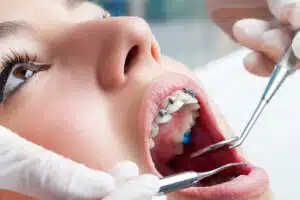
- Tooth alignment and spacing
- Bite balance and jaw relationship
- Root position and bone support
- Gum condition and oral health history
These details guide how force is applied and how progress is adjusted over time. Monitoring allows changes to stay controlled, predictable, and focused on long-term stability rather than quick results.
When DIY Teeth Straightening Can C ause Long-Term Damage
 ause Long-Term Damage
Some changes caused by unsupervised tooth movement do not correct themselves. DIY Teeth Straightening can push teeth outside the bone that supports them, which may lead to lasting instability. Once support is compromised, even professional treatment becomes more complex.
Long-term effects often show up gradually. Teeth may shift back, the bite may feel uneven, or sensitivity may increase. In some cases, damage to roots or gums cannot be fully reversed, making future orthodontic correction more limited and more involved.
Frequently Asked Questions About At-Home Teeth Alignment
Can at-home methods fix bite problems?
Bite issues involve how the upper and lower teeth meet, not just how straight teeth look. Correcting them requires careful planning and monitoring by an orthodontist.
Is discomfort a sign that teeth are moving correctly?
Discomfort only means force is being applied. It does not confirm that teeth are moving in a healthy or controlled direction.
Can teeth shift back after unsupervised treatment?
Yes, relapse is common when tooth movement is not properly stabilized. Retention planning is a critical part of professional orthodontic care.
Are mild alignment issues safe to fix without supervision?
Even small movements can affect roots, bone, and gums. Without evaluation, it is difficult to predict how the mouth will respond.
Can unsupervised teeth straightening affect gum health over time?
Yes, applying force without professional planning can stress the gums and supporting bone. This may lead to recession or sensitivity that becomes noticeable later.
What should someone do if they already tried an at-home method and have concerns?
An orthodontic evaluation can help identify any issues early. A professional assessment allows problems to be addressed before they become harder to correct.
Get to Know Dr. Pelletier and Our Orthodontic Team
Dr. James L. Pelletier has spent decades helping patients achieve healthy, stable smiles through careful planning and professional orthodontic care. At our practice, we see firsthand how important proper evaluation and monitoring are when teeth are being moved. Serving families in Dracut, MA, and Windham, NH, we focus on treatment that protects oral health while delivering results that last.
We often meet patients who tried to move their teeth on their own and were left with questions or discomfort they did not expect. A professional evaluation can provide clarity on what is happening below the surface and help prevent small concerns from turning into long-term problems. Taking the time to understand your options with proper guidance can make a meaningful difference in both comfort and results.
Our approach is personal and thorough. We take the time to evaluate each patient’s needs, use modern technology to guide treatment, and stay involved at every stage of progress.
If you are considering options for straightening your teeth and want clear guidance from an experienced orthodontic team, we invite you to book a consultation with us and talk through your goals in person.